
Warehouse Laser Line Projectors for Virtual Walkways & Safety Boundaries
Create bright overhead floor lines for pedestrian lanes, keep-clear zones, exclusion boundaries, and staging areas without repainting, retaping, or shutting down the floor.
Continuous floor boundaries
Better for long lines and lanes than symbol-based projection.
Less floor-marking upkeep
A strong option where paint and tape wear quickly under traffic.
Industrial use cases
Warehouses, distribution, manufacturing, staging, and material-handling zones.
Configured case by case
The right line system depends on ceiling height, line length, width, and ambient light.
Common Applications for Overhead Laser Line Projectors
Laser line systems are best when the goal is to define a continuous boundary, lane, or perimeter rather than project a symbol or message.
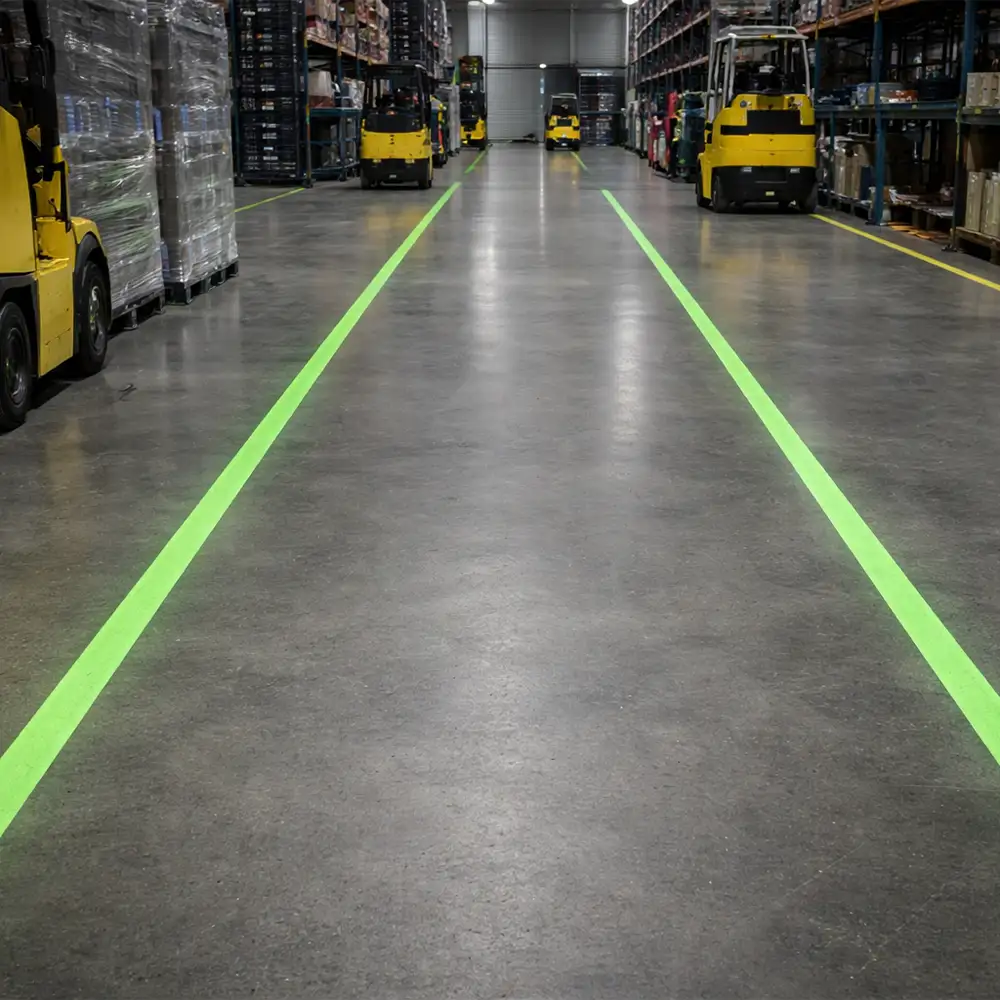
Virtual Pedestrian Walkways
Create clearly defined pedestrian lanes through active warehouse aisles where forklifts, pallets, and workers share the same floor.
- Dedicated walking paths in active warehouse traffic
- Safer employee movement through shared aisles
- Cleaner alternative to worn paint or floor tape
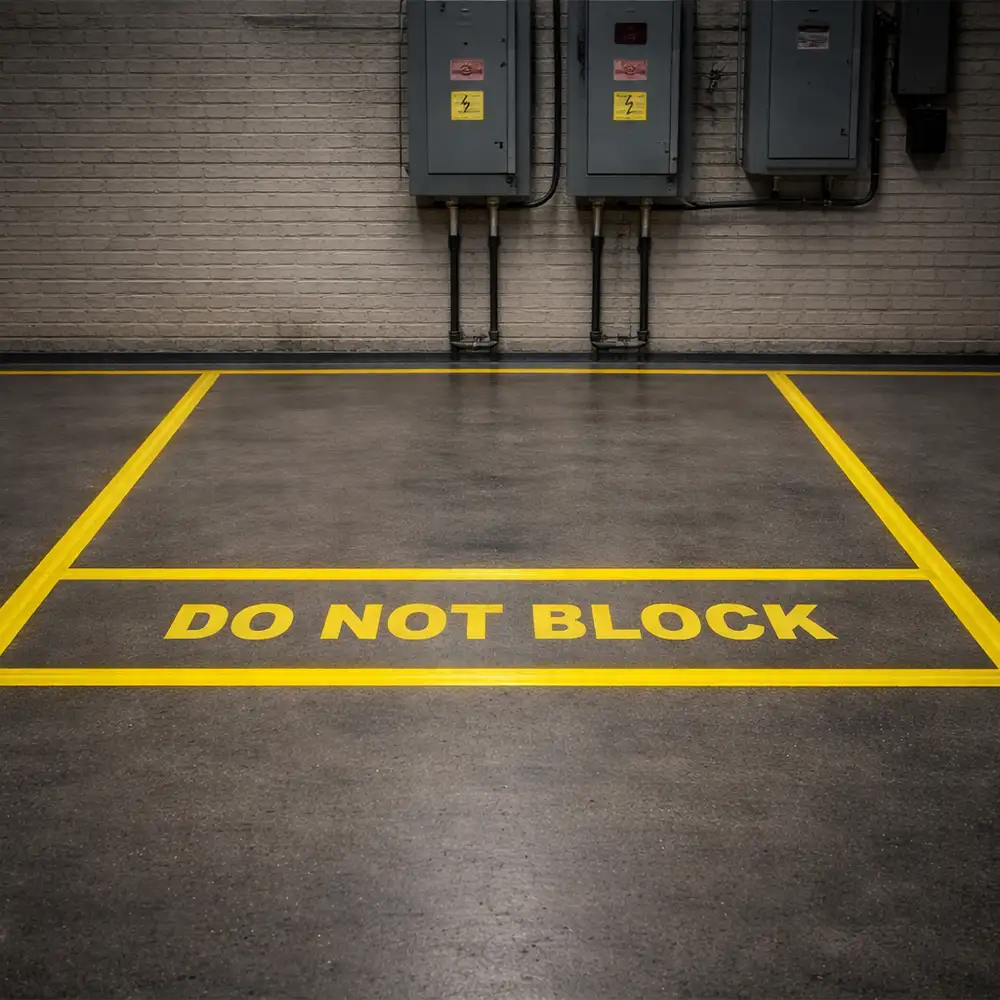
Keep-Clear Lanes
Mark access zones that must remain open near electrical panels, service areas, doors, and critical equipment.
- Electrical panel and maintenance access zones
- Clearly marked do-not-block areas
- Strong visual reminder in operational spaces
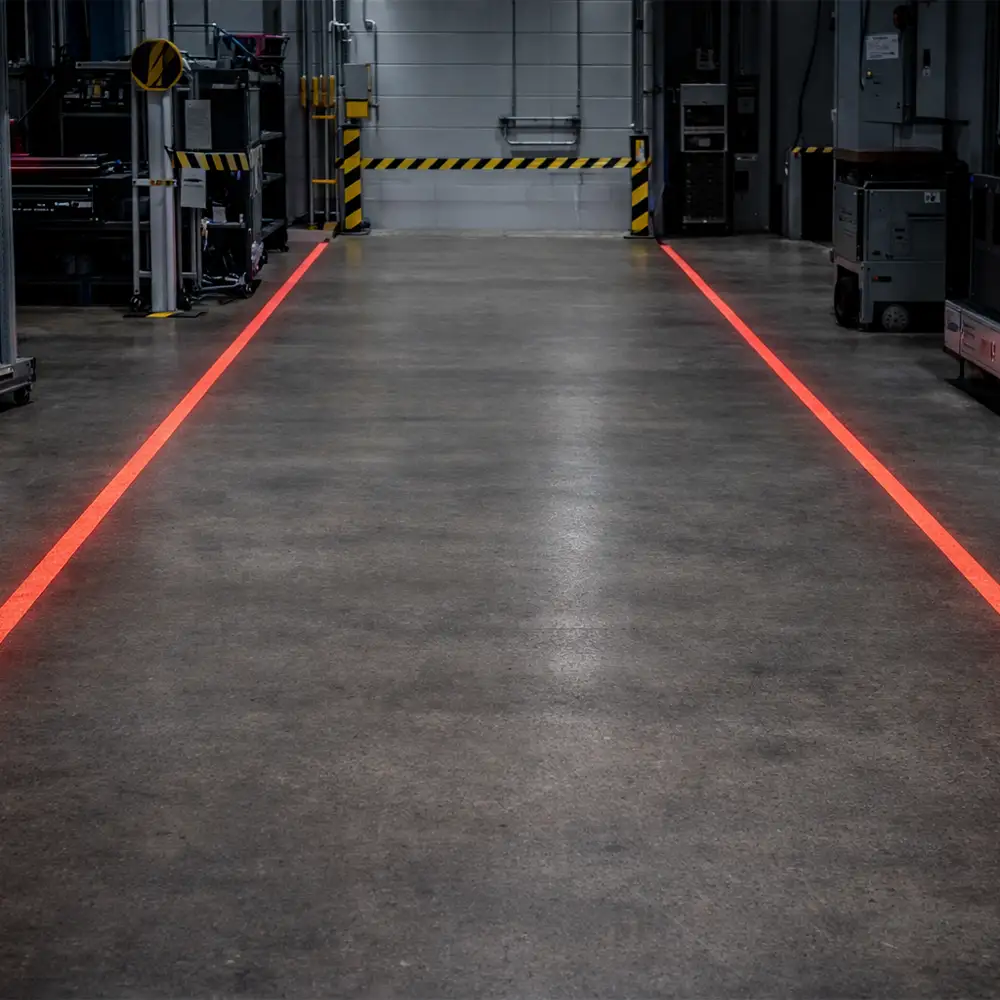
Exclusion Boundaries
Separate people from restricted or hazardous travel zones with bright red perimeter lines that are easy to understand at a glance.
- Restricted machine and AGV travel zones
- No-entry lanes around active equipment
- Clear visual separation without repainting floors
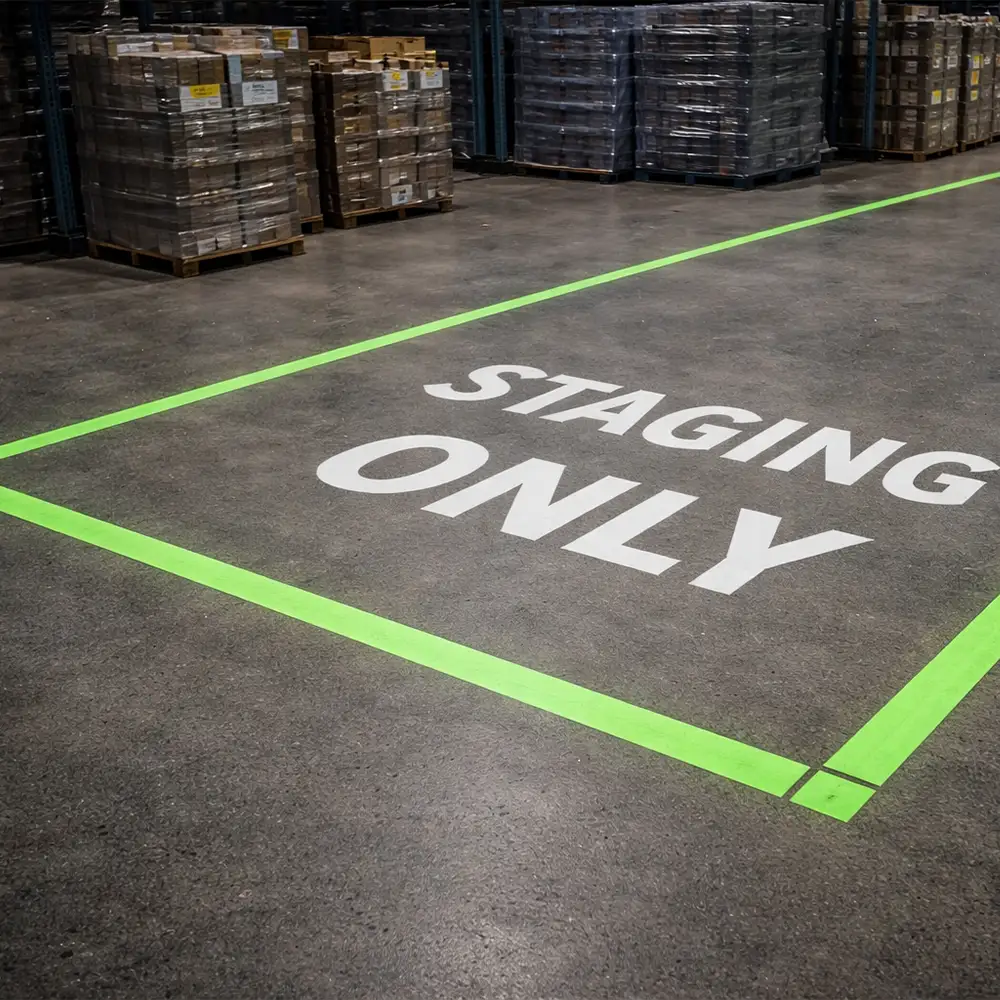
Staging Area Boundaries
Define temporary or ongoing staging zones for pallets, outbound freight, or materials waiting to be moved.
- Clearly defined pallet and holding areas
- Useful for flexible warehouse layouts
- Easy to update when operations change
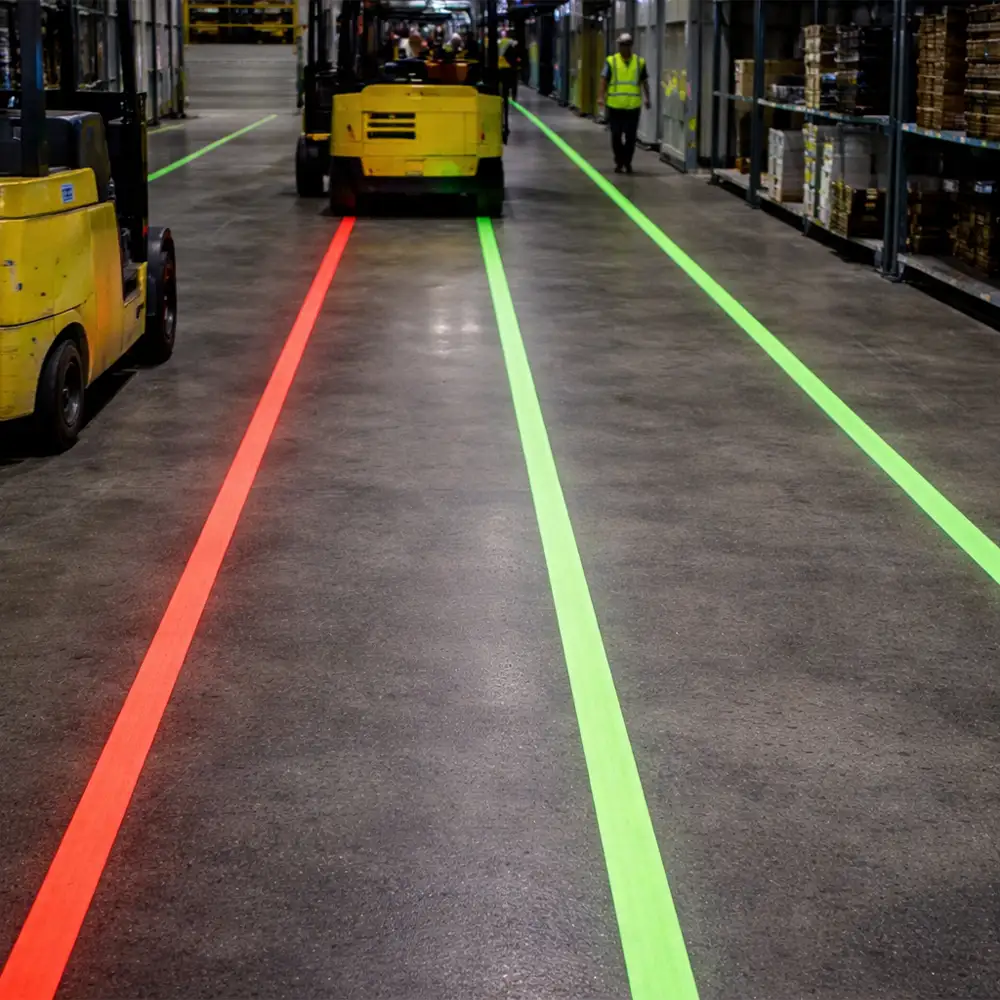
Traffic Separation
Visually divide vehicle routes from pedestrian lanes with different colored lines to reduce confusion in shared travel paths.
- Forklift lanes separated from walking paths
- Better flow in mixed-use warehouse aisles
- Color-coded guidance for safer movement
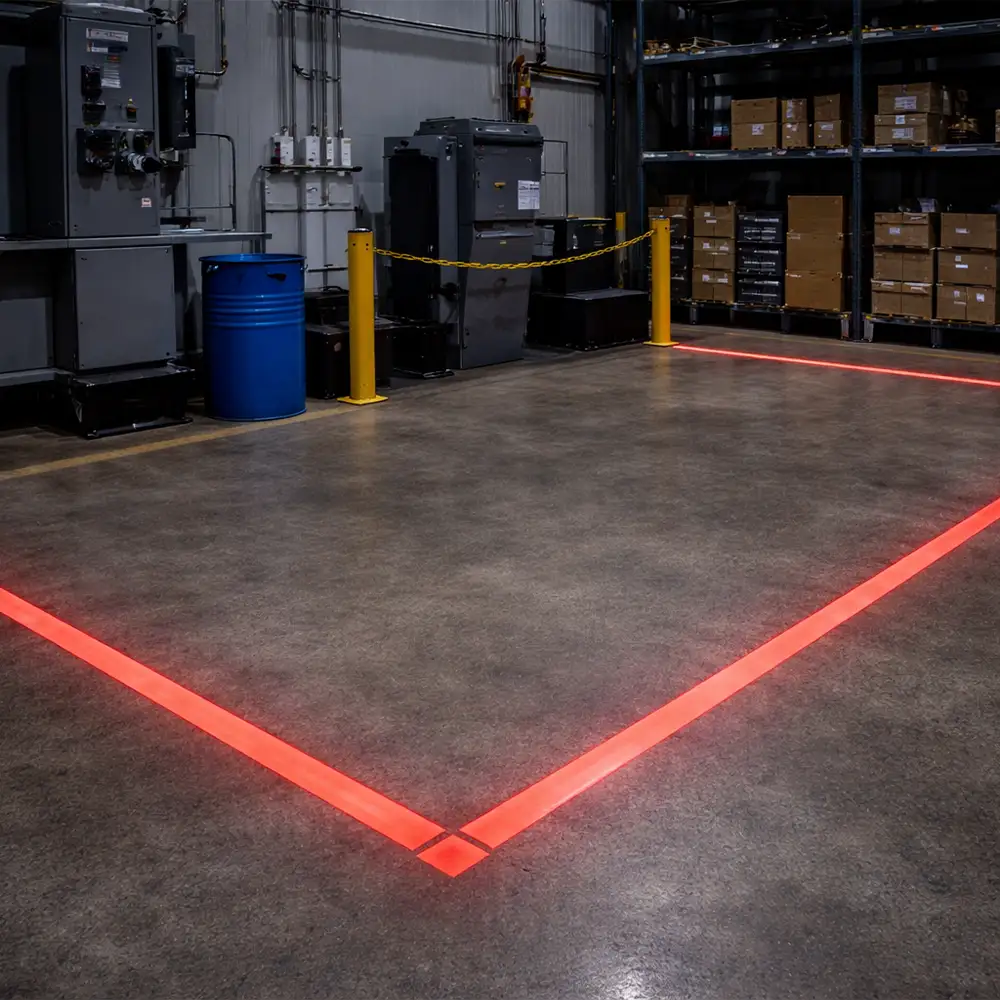
Hazard Perimeters
Outline machine zones, restricted work areas, and potential hazard spaces with a bright visual boundary that stands out on the floor.
- Perimeters around active equipment and machinery
- Restricted safety zones that need clear definition
- Fast visual reinforcement without permanent markings
Why Use Laser Lines Instead of Paint or Floor Tape?
In many facilities, the problem is not drawing the line once. The problem is keeping it visible, clean, and current as traffic and layouts change.
- Less floor maintenance: avoid constantly touching up worn paint or replacing tape in high-traffic zones.
- Cleaner visual presentation: virtual boundaries can look sharper than damaged floor markings.
- Useful for changing layouts: ideal where lanes or zones may need to move over time.
- No scraping or repainting downtime: a strong option where shutting down the floor is a problem.
- Great for long boundaries: especially useful when you need a lane, perimeter, or keep-clear zone rather than a sign.
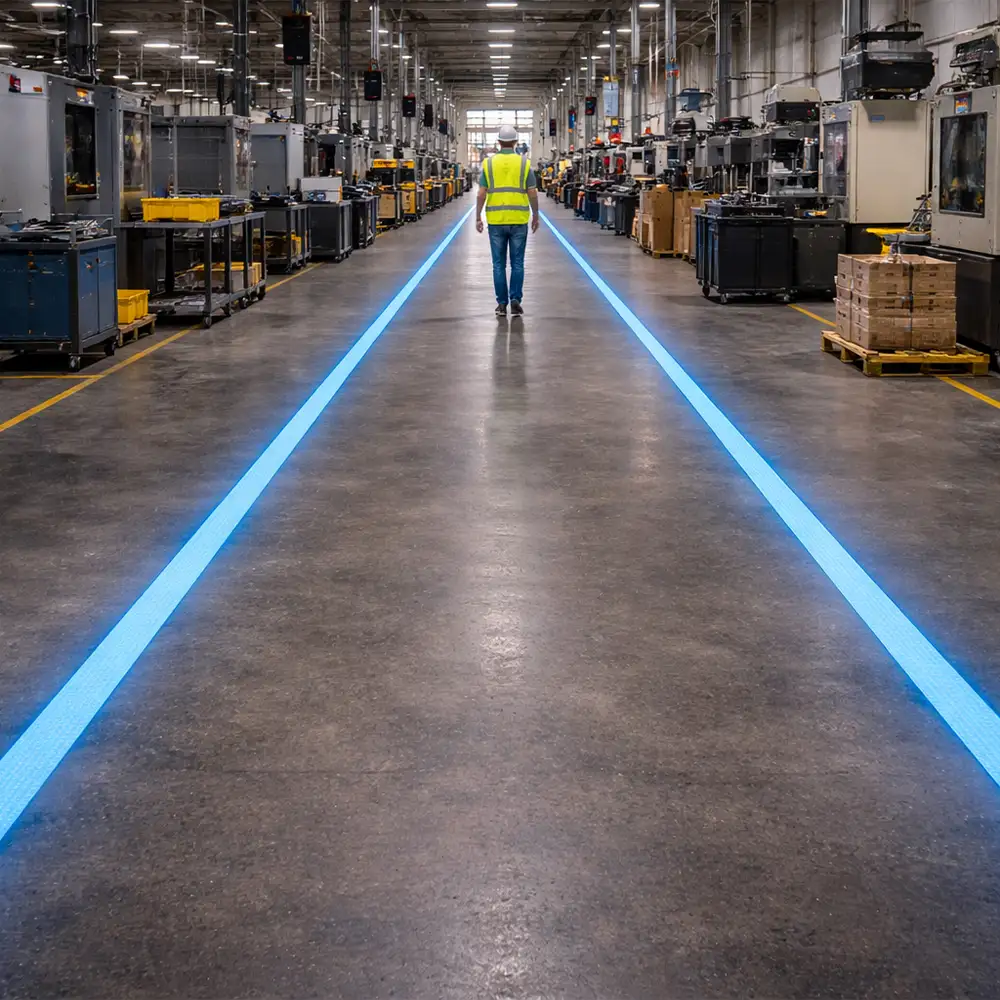
Laser Lines vs Projected Signs
Not every facility needs the same kind of visual marking. The right answer depends on whether you need a continuous boundary or a message-based graphic.
Choose Laser Lines When You Need a Boundary
Best for continuous floor demarcation.
- Pedestrian walkways
- Keep-clear lanes
- Exclusion zones
- Staging boundaries
- Traffic-flow separation
- Long, continuous visual lines
Choose Projected Signs When You Need a Message or Symbol
Best for graphics that communicate meaning.
- STOP signs
- Forklift warnings
- Crosswalk symbols
- PPE reminders
- Directional arrows
- Hazard messages and custom graphics
Not sure which one fits your facility?
Send a photo, your ceiling height, and the area you want to mark. We can help determine whether a laser line system, a sign projector, or a mix of both makes more sense.
How We Recommend the Right Laser Line Setup
The right system depends on more than a generic product sheet. The important inputs are the ceiling height, how long the line needs to be, how wide it should appear, and how bright the area is.
Send a Photo or Layout
Share the area you want to mark and note whether it is a walkway, keep-clear lane, exclusion zone, or staging boundary.
We Size the System
We look at mounting height, line length, line width, ambient light, and placement to recommend the right approach for your space.
You Get a Clean Quote
You receive a recommendation built around your facility instead of guessing from a one-size-fits-all listing.
What Affects Performance?
- Ceiling height: higher mounting points usually require a different system strategy than lower ones.
- Desired line width: thin guidance lines and broader visual boundaries are not the same job.
- Ambient light: bright overhead lighting changes what will read clearly on the floor.
- Floor color and finish: darker, lighter, matte, or glossy surfaces can change visual impact.
- Application type: a pedestrian lane, no-go zone, or dock boundary may require different placement.
Facilities That Benefit Most
- Warehouses with heavy forklift traffic
- Distribution centers with changing layouts
- Manufacturing spaces needing flexible lane guidance
- Operations where repainting disrupts workflow
- Facilities that want clearer visual separation without constant floor marking upkeep
Send a Photo. Get a Suggested Laser Line Layout.
The fastest way to get the right answer is to send a photo or layout with the area you want to mark, your approximate ceiling height, and the kind of boundary you need.
Include whether you need a walkway, keep-clear lane, exclusion zone, or staging boundary.
What to send
- A photo or simple layout of the area
- Approximate mounting height
- The length or boundary you want to mark
- Whether it is a walkway, lane, zone, or perimeter
- Any known lighting challenges